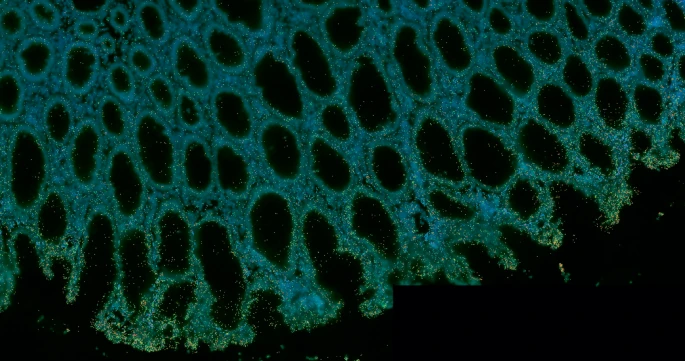
As the next generation of spatial transcriptomics tools hits the market, researchers are uncovering previously unknown interactions that could transform clinical research.
To deeply investigate cell–cell interactions, particularly at the frontiers of disease, researchers increasingly are turning to spatial biology. Single-cell RNA sequencing reveals much about the activities of individual cell types, but key interactions are lost by dissociating cells from their native configuration in tissues. Conversely, methods that retain spatial information have so far been limited in how much of the transcriptome they can capture at single-cell resolution. Lower-plex methods can provide cell type and location information, allowing researchers to make inferences about cellular interactions, but may miss details about the exact molecular mechanisms involved.